Why does soil change so much across the North Shore?
It comes down to the rock underneath. Much of the North Shore sits on Hawkesbury sandstone, the same rock as the cliffs and gullies of its national parks. It weathers into shallow, sandy soil that drains fast and holds few nutrients.
Along the higher ridges, particularly in Ku-ring-gai and Hornsby, the sandstone is capped with Wianamatta shale. Shale weathers into deeper clay soils that are richer in nutrients, which is why those ridges once carried tall Blue Gum High Forest, now a critically endangered ecological community. Walk from a ridge top down to the slopes and gullies, and a garden can go from clay to sand within a few streets.
On the Northern Beaches, suburbs close to the beach often have deep sand, while the slopes and plateaus behind them vary from sandy to clay based soils.
How can you tell what soil you have?
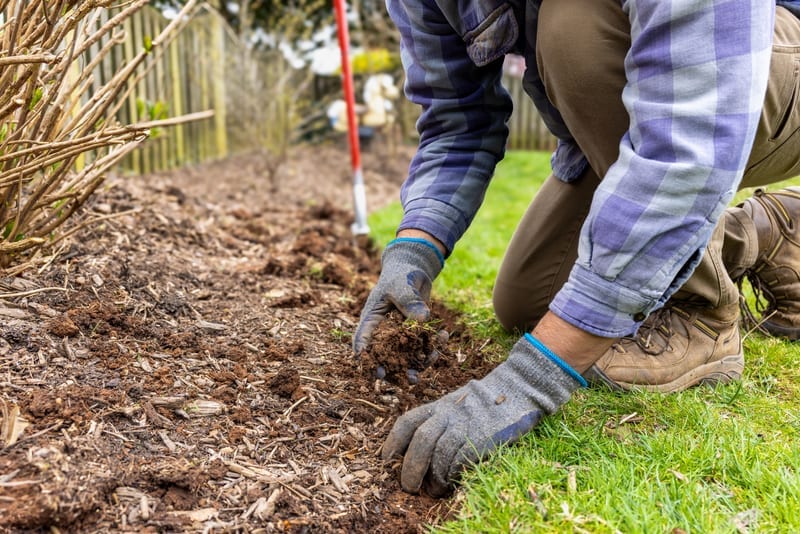
Start with a squeeze test. Take a small handful of soil from about a spade’s depth, wet it until it feels like putty, and squeeze it in your hand. Then try to press it out between your thumb and finger into a ribbon.
| Soil type | What the wet soil does | What it means |
|---|---|---|
| Sandy | Falls apart and feels gritty | Drains fast, dries out fast and holds few nutrients |
| Loam | Holds a ball, but the ribbon breaks off short | The easiest soil to garden, holding water without staying wet |
| Clay | Presses out into a smooth ribbon longer than about 5 centimetres | Holds water and nutrients, but drains slowly and sets hard when dry |
Then check the drainage. Dig a hole about 30 centimetres deep, fill it with water, let it drain, and fill it again. If the second fill is still sitting there after several hours, the soil drains poorly, and plants that dislike wet roots will struggle.
While you have a sample, a cheap pH kit from a garden centre shows whether the soil is acidic or alkaline. Most garden plants grow best in slightly acidic to neutral soil.
How do you improve sandy soil?
Sandy soil over sandstone drains quickly and holds few nutrients. Once it dries out completely it can also start to repel water, so rain and irrigation run off instead of soaking in.
- Dig in plenty of compost or well rotted manure before planting, and keep adding organic matter every year, since it breaks down quickly in sand.
- Mulch beds to around 50 to 75 millimetres to keep the soil cool and moist.
- Use a soil wetting agent if water beads on the surface or runs off.
- Water deeply and less often, so roots grow down rather than staying near the surface.
- Feed little and often, since nutrients wash through sand quickly.
How do you improve clay soil?
Clay soil on the shale ridges holds water and nutrients well, which makes it fertile, but it drains slowly, stays wet through winter, and sets hard and cracks in a dry summer.
- Dig in organic matter such as compost, which opens up the structure over time. It is the single most useful thing you can add.
- Never dig or walk on clay while it is wet, because it compacts and loses its structure.
- Try gypsum only if your clay disperses. Drop a dry crumb of soil into a glass of rainwater and leave it overnight. If a cloudy halo spreads out around it, gypsum will help. If the water stays clear, gypsum will do very little.
- Plant anything that needs good drainage into a raised bed or mound, not a hole dug into the clay, which can fill with water like a pot with no drainage hole.
- Mulch to stop the surface baking hard and cracking in summer.
What grows well in sandy and clay soil?
Working with the soil you have is easier than fighting it. A few reliable choices for each:
| Soil | Plants that usually do well | Plants to be careful with |
|---|---|---|
| Sandy | Grevilleas, banksias, westringia, correas, lomandra and other natives from local sandstone country | Hungry, thirsty plants such as hydrangeas, unless the soil is well improved |
| Clay | Lilly pilly, lomandra, dianella, callistemon and melaleuca, which cope with heavier, wetter ground | Plants that need sharp drainage, such as lavender, rosemary and many grevilleas, unless planted on a mound |
Every garden is different, even within a street. A garden advice visit looks at the soil, light and drainage bed by bed before anything is planted, and new beds on either soil are easier to keep healthy with irrigation set up zone by zone.
How does soil affect a lawn?
On sand, lawns dry out and thin quickly in summer, so they need deeper watering, a wetting agent where water runs off, and regular feeding. On clay, lawns are more likely to compact and stay wet, so aeration and drainage matter more. Our guide to the best grass for shade covers choosing turf for the light you have.