How do you choose the right hedge plant?
Start with the job the hedge has to do, then look at the site. A two metre privacy screen on a boundary, a knee high border around a bed and a windbreak on a coastal block need very different plants. Choose wrongly and you spend years cutting back a plant that wants to be a different size.
- Height. Choose a plant that is naturally close to the height you want to keep. Some lilly pillies grow into trees if they are left alone, which means hard, frequent cutting to hold them at two metres.
- Light. Check the hours of direct sun along the whole line. A hedge that runs from full sun into the shade of a big tree often grows unevenly.
- Soil and drainage. Most hedge plants dislike sitting in wet ground, which matters on heavier clay soils.
- Wind and salt. Close to the beach, choose plants that tolerate salt laden wind.
- Upkeep. Fast growers give privacy sooner but need cutting more often. Slower growers stay neat for longer between trims.
Which hedge plants grow best in Sydney?
| Plant | Usual hedge height | Light | Growth | Best for |
|---|---|---|---|---|
| Lilly pilly | 1.5 to 5 metres | Sun to part shade | Fast | Privacy screens with colourful new growth |
| Sweet viburnum | 2 to 4 metres | Sun to part shade | Fast | Tall, dense screens |
| Murraya | 1 to 3 metres | Sun to part shade | Moderate | Fragrant flowering hedges |
| Pittosporum | 2 to 4 metres | Sun to part shade | Fast | Narrow screens in tight side passages |
| Sasanqua camellia | 1.5 to 3 metres | Part shade | Slow to moderate | Shadier boundaries, with autumn flowers |
| Japanese box | 0.3 to 1 metre | Sun to part shade | Slow to moderate | Low formal borders |
| Westringia | 0.5 to 1.5 metres | Full sun | Moderate | Coastal gardens and informal native hedges |
Heights are what each plant is usually kept at as a hedge, not its full natural size, and named varieties differ, so check the label before you buy. With lilly pilly, choose a variety sold as psyllid resistant. Psyllids are small sap sucking insects that leave new leaves pimpled and distorted, and some older varieties are badly affected.
What hedge grows in shade on the North Shore?
Big trees and tall neighbouring houses keep many North Shore boundaries in shade for much of the day. Lilly pilly, sweet viburnum, murraya and sasanqua camellia all cope with part shade. In deeper shade every hedge grows more slowly and more thinly, so allow longer for it to fill in, and leave sun lovers such as westringia for the open parts of the garden.
Soil changes from street to street here, from sandy soil over sandstone to heavy clay on the ridges. Our guide to sandstone and clay soil covers how to prepare each before planting.
What hedge grows best near the beach?
On exposed Northern Beaches blocks, salt laden wind scorches the leaves of many popular hedges, and sandy soil dries out fast. Plants that grow naturally on the coast do far better.
- Westringia, the native coastal rosemary, for low to medium hedges in full sun.
- White correa, Correa alba, a tough grey leaved native shrub that clips into a neat low hedge.
- Coast banksia, Banksia integrifolia, as a taller, informal windbreak where there is room for it.
- Lilly pilly or viburnum further back from the front line, once a tougher row takes the worst of the wind.
Water a new coastal hedge deeply until it is established, and keep mulch over the root zone to hold moisture in the sand.
How do you plant a hedge so it grows evenly?
- Prepare the whole strip, not individual holes, digging compost in along the line so every plant gets the same start.
- Space the plants evenly. As a guide, low box hedges go in about 30 centimetres apart, and screening plants such as lilly pilly and viburnum about 60 to 90 centimetres apart.
- Water deeply straight after planting, then regularly through the first summer.
- Mulch the strip, keeping the mulch a hand’s width away from the stems.
- Tip prune from the first year. Light, regular trims make a young hedge branch low down, instead of shooting up with bare stems at the base.
When and how should you trim a hedge in Sydney?
Most Sydney hedges get their main cut in late spring, once the new growth has firmed up, and a lighter trim in late summer or early autumn. Trim flowering hedges such as murraya just after a flush of flowers, so the next round of buds is not cut off. The Sydney garden calendar sets out the rest of the year.
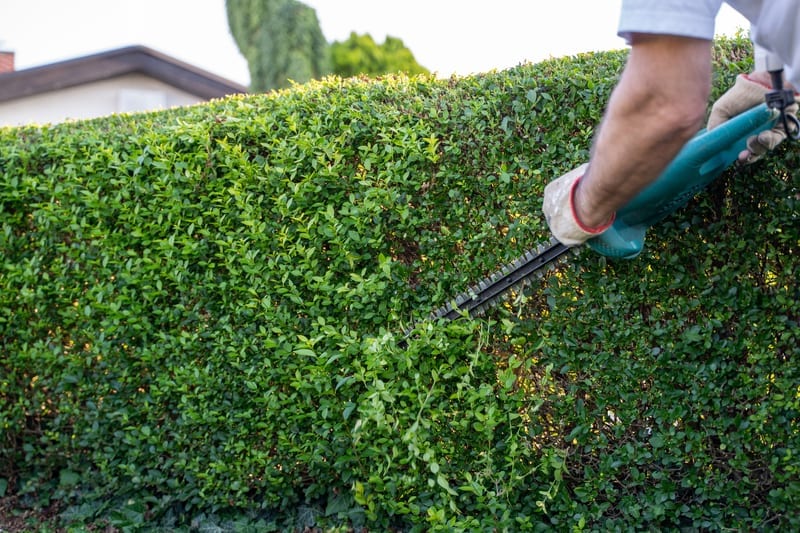
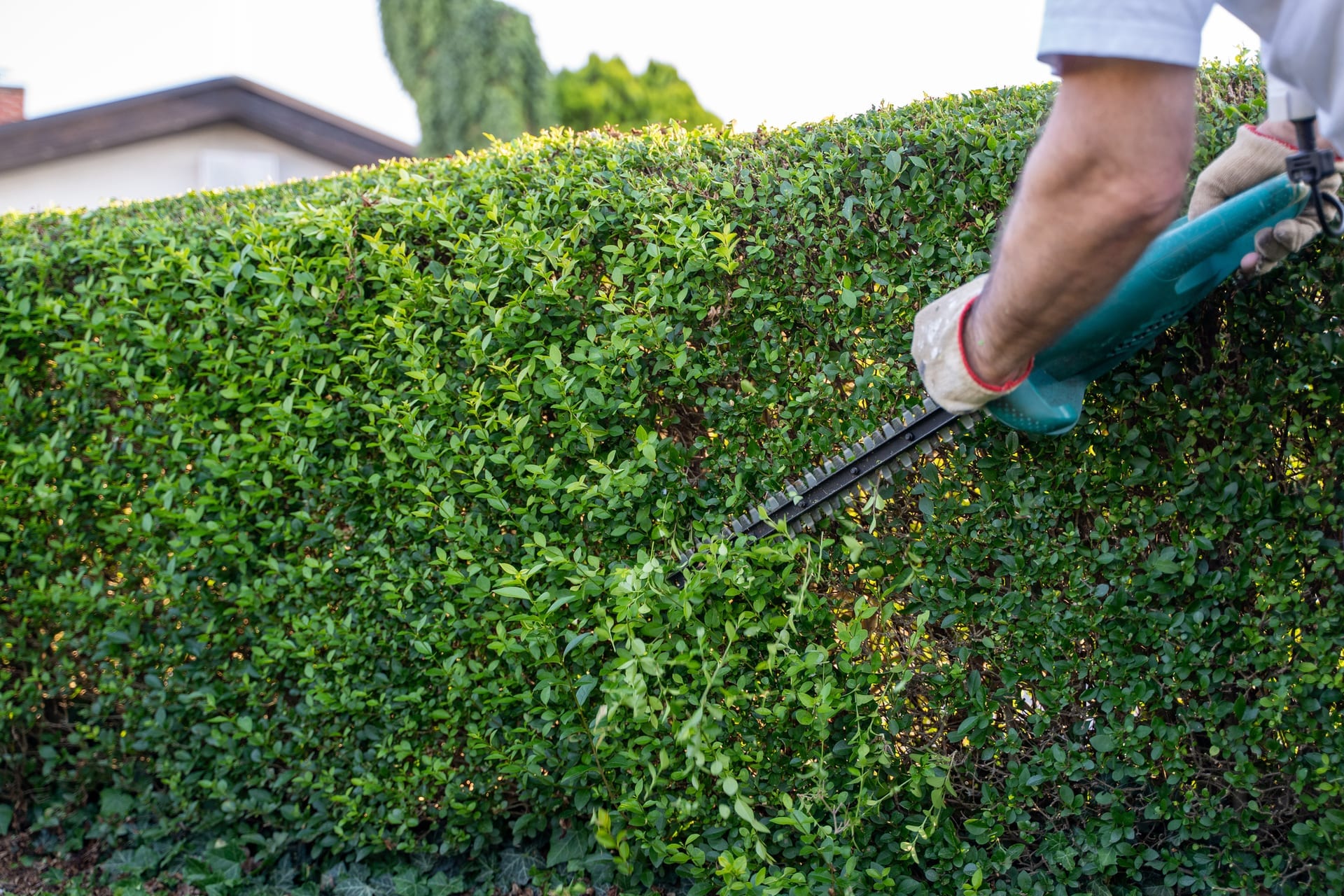
Cut the hedge slightly narrower at the top than at the base. The taper lets light reach the lower branches, which keeps the hedge dense to the ground. Bring an overgrown hedge back over two or three cuts rather than one hard cut, which can leave it bare for months. It is the same approach our hedge trimming visits follow.
Can a neighbour make you cut back a hedge in NSW?
In some cases. Part 2A of the NSW Trees (Disputes Between Neighbours) Act 2006 lets a neighbour apply to the Land and Environment Court about trees planted to form a hedge that rise to at least 2.5 metres and severely obstruct sunlight to a window of their home, or a view from it. The bar is high, since the obstruction has to be severe, and the court cannot award compensation.